As [cloud] heads to Paris Photo, we step into a fair where photography refuses its boundaries and joyfully joins the wider currents of contemporary art, revealing a market shaped by hybridity, conceptual sharpness and the exuberant brilliance of work like Mitchell Moreno’s Body Copy.
Paris Photo continues to function as the art world’s annual stress test. It reveals not only the health of the market but the temperature of contemporary visual culture and the appetite for risk within it. In 2025 this feels particularly acute. The fair arrives in a moment shaped by post-pandemic precarity, a digital ecosystem in constant flux and a new generation of artists who refuse to treat photography as a bounded discipline. Instead, photography is sliding, seeping and joyfully trespassing across the borders of installation, performance, sculpture and digital practice. Paris Photo has always been international, but this year it reads like an atlas of porous edges.
The dominant impression on entering the Grand Palais Éphémère is one of discipline fatigue. The strongest work refuses taxonomies. Photographs appear as sculptural objects, printed on unconventional substrates or embedded within environments that require the viewer to navigate rather than simply look. This echoes broader patterns in contemporary art where hybridity is no longer a trend but a condition. Artists such as Sara Cwynar, Hito Steyerl and Paul Mpagi Sepuya continue to prove that photography is most alive when it interrogates its own limits. Their projects stretch the medium outward, and in doing so remind us that photographic thinking has become foundational across visual culture.
The market responds accordingly. Collectors now favour works that offer both conceptual rigour and material distinction. The effectiveness of a photograph is no longer judged by image alone but by how it occupies space, how it destabilises conventions of authorship and how it performs in the wider ecology of contemporary art. Paris Photo 2025 reflects this expanded criterion. A premium is placed on works that engage with politics, identity and ecological urgency without falling into predictable didacticism. Galleries are increasingly foregrounding artists who understand photography as a tool for world-building, not merely world-recording.

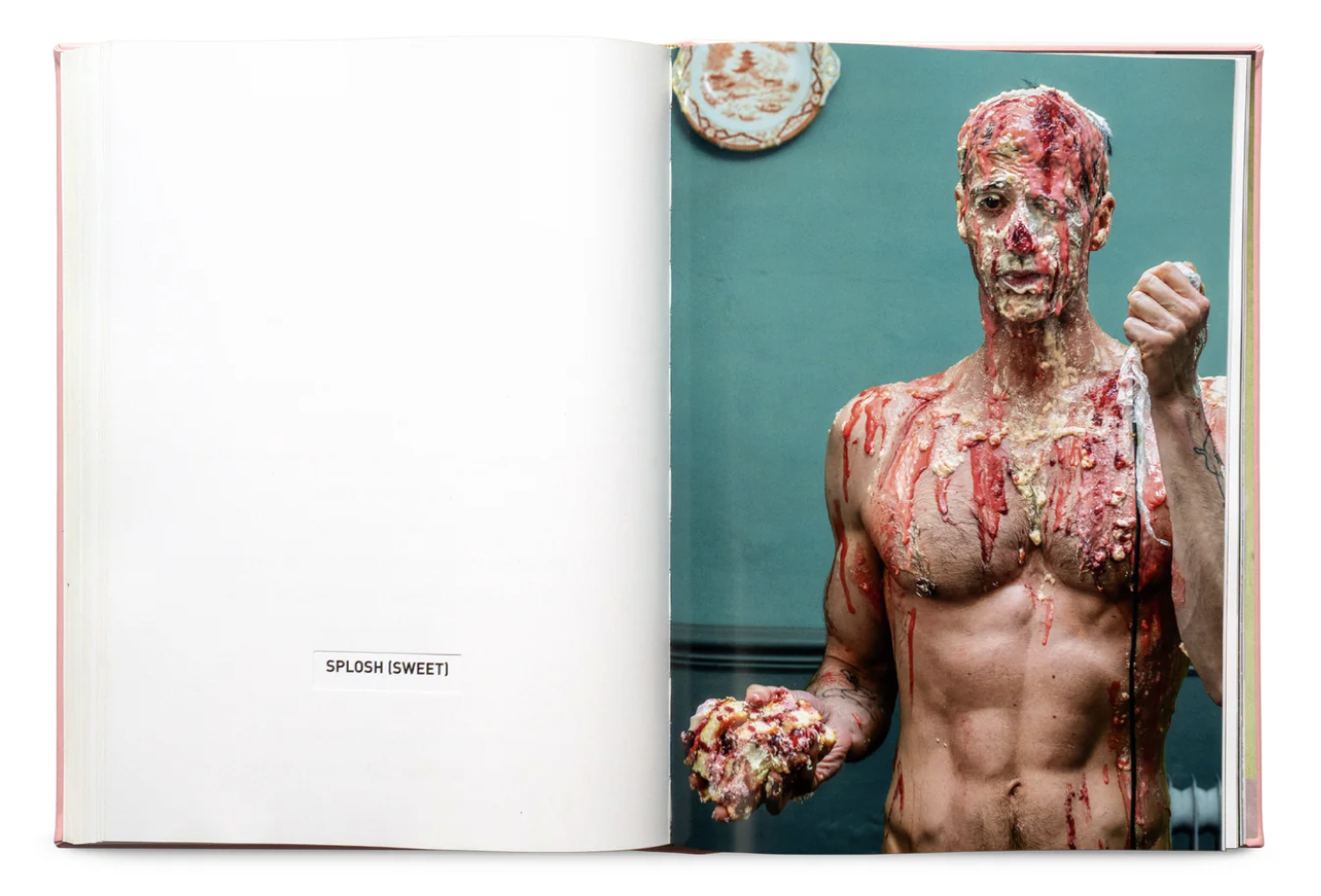
One of the clearest indicators of this shift is the presence of Mitchell Moreno’s new book Body Copy. Its acclaim as a body of work to date is unsurprising. The book exemplifies how contemporary photographic brilliance can operate with intimacy, wit and theoretical charge while speaking fluently to the wider art landscape. Body Copy probes the mediated body with a level of candour that feels both unsettling and generous. It situates photography within the messy choreography of desire, gender and digital selfhood. Crucially, the work’s impact extends beyond its pages. It activates conversations that resonate across performance studies, queer theory, and the politics of representation. Moreno’s practice demonstrates that the photobook remains one of the most vital forms for complex, interdisciplinary artistic thought. The buzz around Body Copy at Paris Photo functions as a reminder that the market still makes room for work that pushes against the grain of commercial predictability.

Mitchell Moreno, BODY COPY – open pages – GOST Books (2025)
Elsewhere in the fair, there is a clear movement toward practices that merge archival research with speculative futurity. The documentary impulse remains strong, but it has evolved into something more fragmentary and atmospheric. Following Ariella Azoulay’s call for a more ethical and relational approach to photographic histories, many artists are using the archive to trouble inherited narratives rather than reinforce them. Paris Photo responds by showcasing works that reconstruct, rather than simply represent, social realities. This aligns with a wider art world impulse to critique the infrastructures of visibility and value that shape our understanding of images.
The fair also offers moments of levity. There is a sense that artists are permitting themselves humour in ways that were once deemed unserious for photography. Camp aesthetics, absurd tableaus and formally playful experiments mingle with high-theoretical propositions. This suggests a healthy refusal to treat the art market as a site of solemnity. Instead, Paris Photo 2025 feels like a negotiation between earnest cultural responsibility and a much needed sense of pleasure. Even the most conceptually dense works carry a subtle wink, perhaps acknowledging the impossibility of pinning down a medium that thrives on instability.
For [cloud], attending Paris Photo this year means stepping into a global conversation about how photography asserts its relevance not through purity but through entanglement. The fair reveals a medium that is not threatened by its proximity to other art forms but nourished by them. As image production proliferates across platforms, photography is less a single practice and more a way of thinking through the world. The market will always chase novelty, but Paris Photo 2025 shows that artists are leading the way with practices that are plural, porous and unapologetically interdisciplinary.
What the fair ultimately stages is a vision of photographic culture that refuses smallness. It demands that we see the photograph not as a fixed object but as a collaborator in a larger network of ideas. And if this year’s excitement around works such as Moreno’s Body Copy is any indication, the future of photography lies in its ability to touch other worlds, other bodies and other disciplines while still claiming its own voice.
References
Azoulay, A. (2019) Potential History: Unlearning Imperialism. Verso.
Cwynar, S. (2020) Glass Life. Aperture.
Moreno, M. (2025) Body Copy. GOST Books.
Sepuya, P. M. (2019) Studio Work. Aperture.
Steyerl, H. (2017) Duty Free Art: Art in the Age of Planetary Civil War. Verso.

