As the UK confronts the realities of budget day and enters a volatile global economic era, this essay explores how artists across history have revealed, critiqued, and reimagined the structures of consumer desire. It shows how art remains one of the sharpest tools for understanding the economics that shape our lives.
On the day of the United Kingdom’s much anticipated government budget announcement, conversations about value, austerity, and public spending dominate the national mood. These debates echo across the cultural sector, where questions of funding, precarity, and the commodification of creativity are increasingly urgent. Art has long functioned as both a mirror and a counterpoint to the pressures of the market. Examining its relationship to consumerism offers a way to understand how economic forces shape not only cultural production but also the desires and anxieties of everyday life.
From the nineteenth century onwards, artists have negotiated the complex terrain between commerce and critique. The Arts and Crafts movement, led by William Morris, attempted to resist the growing industrialisation of objects, advocating for hand workmanship and material integrity as a challenge to the spread of mass production (Naylor 1980). Although Morris’s designs became luxury commodities, they signalled a belief that aesthetics could intervene in the logic of consumer life.

The twentieth century collapsed the boundaries between art and commodity more visibly. Andy Warhol’s Campbell’s Soup Cans (1962) elevated supermarket branding to the status of painting, revealing the seductions of repetition and the persuasive simplicity of commercial imagery. Warhol’s practice resonates with Jean Baudrillard’s analysis of a world where consumption becomes a semiotic system that shapes identity through signs rather than needs (Baudrillard 1998).
Other artists adopted the graphic languages of advertising to expose the ideological weight of consumer desire. Barbara Kruger’s Untitled (I shop therefore I am) (1987) distilled the entanglement of identity and consumption, foregrounding the gendered pressures of commercial culture (Williamson 1978). In sculpture, Jeff Koons harnessed the gleaming aesthetics of luxury display to amplify the instability of taste and the psychology of excess within late capitalism (Foster 2011).
Contemporary artists have pushed these critiques into digital and global contexts. Hito Steyerl’s How Not to Be Seen (2013) reveals how twenty first century consumerism extends beyond material goods into the realm of image economies, data extraction, and algorithmic visibility. SUPERFLEX’s Superkilen (2011) highlights how global goods move through different cultures, exposing inequalities embedded in international systems of exchange.

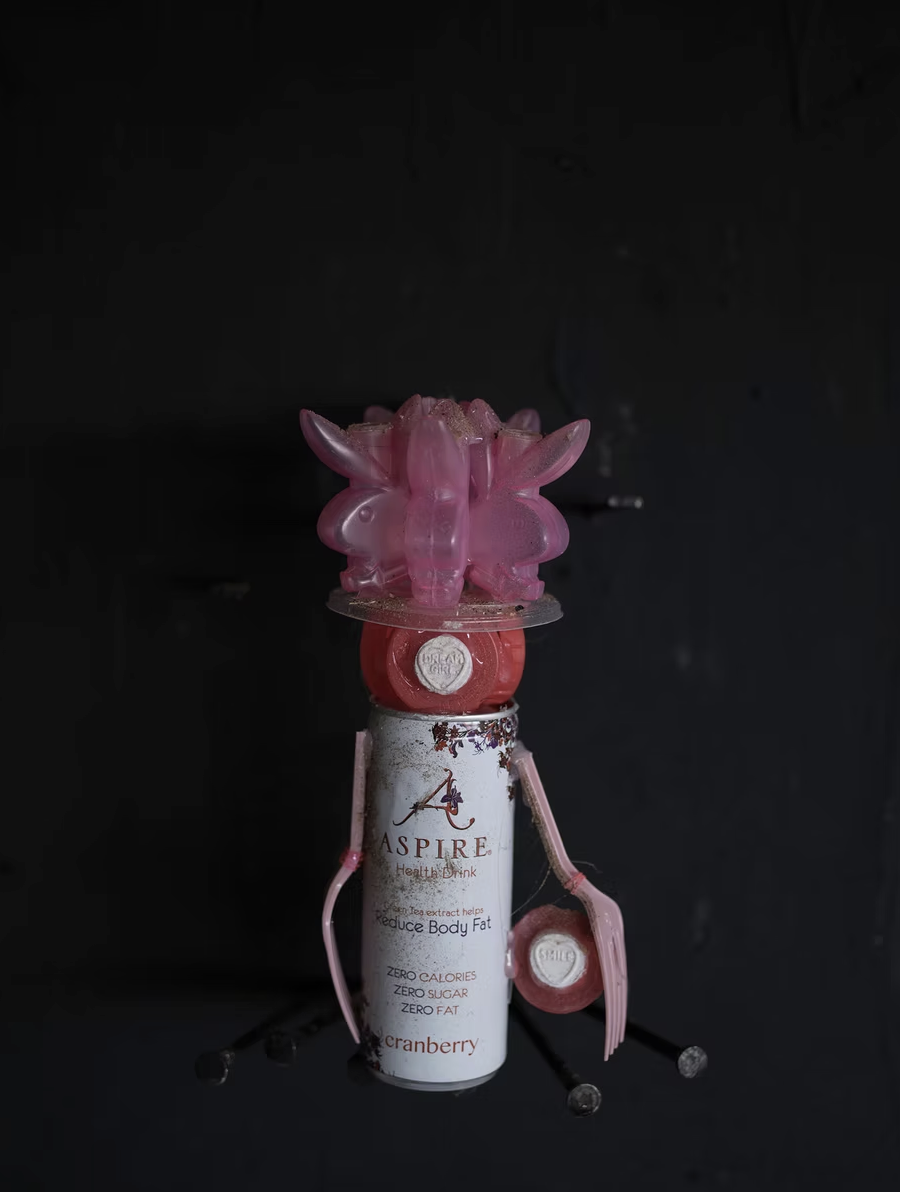
Crucially, this discourse continues through practitioners who confront consumer culture with nuance and urgency. Among them is British artist and researcher Dawn Woolley, whose work examines the social power of images, gendered consumption, object desire, and the self as commodity. Woolley’s practice spans photography, installation, and performance, often questioning how bodies become products within the visual economies of advertising and social media. Her critical insights are especially relevant now as the boundaries between consumer identity and digital selfhood grow increasingly porous. She will be a guest speaker for [c]CC Art School next week, and tickets are available for public attendance via our website, inviting audiences to engage directly with her research and practice.
If we look further back, even historical artworks communicate the deep roots of consumer desire. Dutch Golden Age still life painting frequently depicted imported luxuries such as citrus, porcelain, and exotic flowers. These paintings communicated wealth, global trade routes, and colonial expansion while also reminding viewers of the fleetingness of material abundance (Bryson 1990). They reveal that consumerism is not a symptom of modernity alone but part of a long cultural history through which objects become symbols of aspiration, status, and power.

As we move toward 2026, the global economic landscape is marked by instability. Inflationary pressures, volatile energy markets, and the shifting geopolitics of trade impact not only household consumption but also the value and survival of the cultural sector. Consumerism is increasingly digital, environmentally fraught, and psychologically saturated. Fast fashion collapses product cycles into near instant turnover. Social media platforms monetise attention as the ultimate commodity. Global art markets remain both resilient and exclusionary, with record auction prices contrasting sharply with the precarity experienced by emerging and mid career artists.
Within this environment, art retains a critical role. It reveals the structures through which desire is shaped, exposes the politics underpinning consumption, and imagines alternative ways of valuing labour, time, and creativity. The tensions between art and consumerism have never been more consequential. As economic conditions evolve into 2026, the challenge for artists and cultural organisations lies in navigating these pressures while sustaining the capacity to critique, disrupt, and reimagine the systems that govern contemporary life.
References
Baudrillard, J. 1998. The Consumer Society: Myths and Structures. London: Sage.
Bryson, N. 1990. Looking at the Overlooked: Four Essays on Still Life Painting. London: Reaktion.
Foster, H. 2011. The Art-Architecture Complex. London: Verso.
Kruger, B. 1987. Untitled (I shop therefore I am). Artwork.
Morris, W. and Naylor, G. 1980. The Arts and Crafts Movement. London: Studio Vista.
Steyerl, H. 2013. How Not to Be Seen: A Fucking Didactic Educational .MOV File. Video essay.
SUPERFLEX. 2011. Superkilen. Installation, Copenhagen.
Warhol, A. 1962. Campbell’s Soup Cans. MoMA, New York.
Williamson, J. 1978. Decoding Advertisements: Ideology and Meaning in Advertising. London: Marion Boyars.
Woolley, D. 2016. The Girl in the Shoe and other works. Artist research output and installations.
Zuboff, S. 2019. The Age of Surveillance Capitalism. London: Profile.
