Permeable Bodies, Radiant Exchanges: Thermal Vision and the Language of Encounter in Linda Alterwitz’s Practice
What if the most radical photographic gesture is not to show more, but to show what the eye cannot see? In Injection Site and Conversations with the Sun, Linda Alterwitz expands photography beyond optical realism into a language of heat, light, and permeability, revealing the human body not as sealed subject but as ecological conduit, radiant with exchanges between the visible and the unseen.
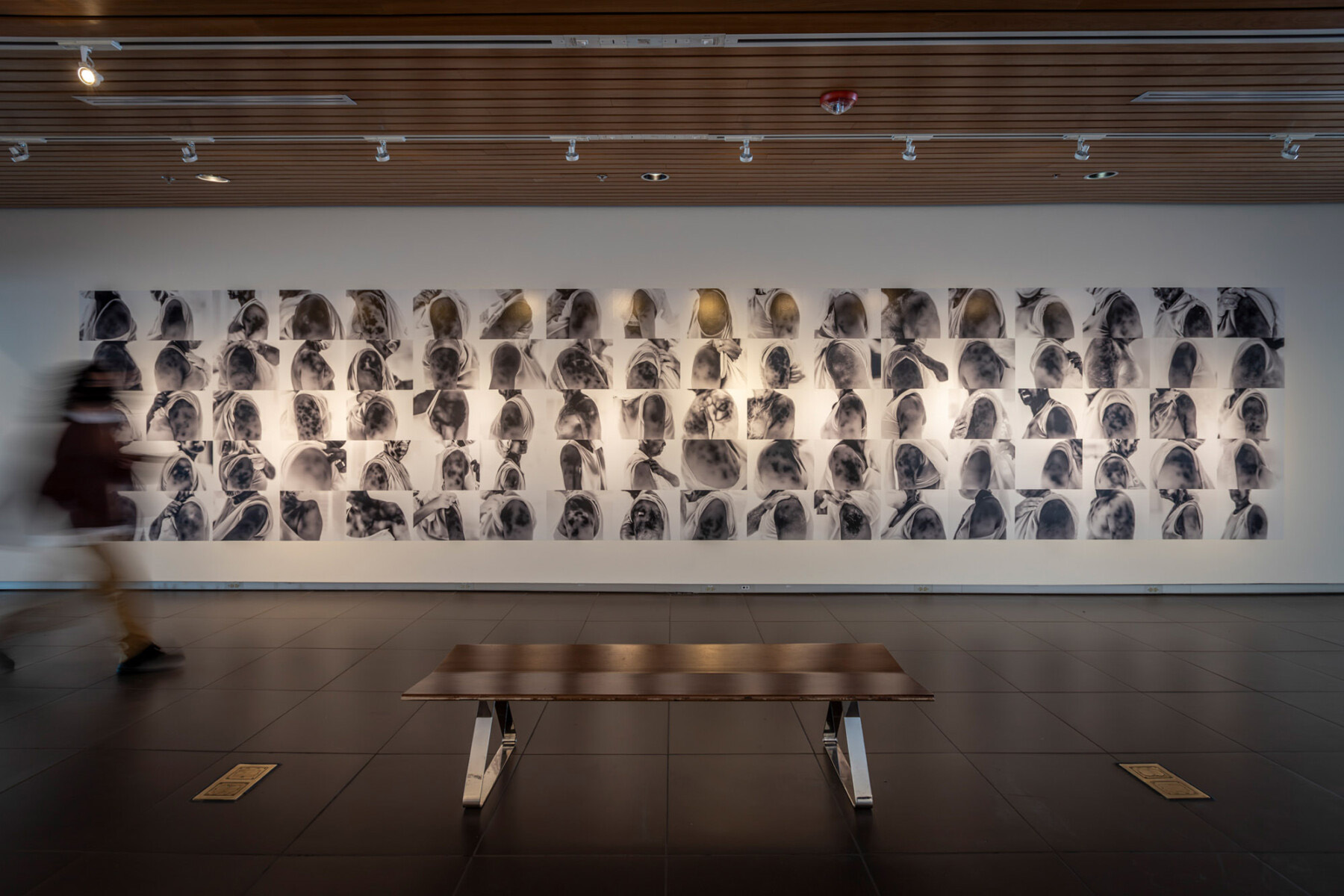
There is something deceptively modest about the works that comprise Linda Alterwitz’s Injection Site. A small puncture. A slight inflammation. A surface gently disrupted. Nothing spectacular. Nothing heroic. And yet, in this near invisibility, the work stages one of the most philosophically dense propositions available to contemporary photographic practice: that the body is not a sealed object but a threshold, and that every threshold is ecological.

What complicates this further is Alterwitz’s use of thermal imaging within the series. The skin is not only photographed in visible light but rendered through infrared registers that translate heat into chromatic variation. In doing so, the image detaches itself from the conventions of optical realism. The body is no longer described solely by reflected light but by emitted energy. We are not simply seeing surface but witnessing metabolic response. The puncture becomes a thermal event. Inflammation glows. Circulation becomes visible as gradient. The photograph registers what the naked eye cannot perceive, reminding us that vision is always technologically extended.
Thermal imaging is often associated with surveillance, militarised optics, diagnostic apparatus. Alterwitz repositions this technology away from control and toward attentiveness. The apparatus does not expose in order to dominate. It reveals in order to recalibrate perception. In this gesture, the work echoes Paul Virilio’s observation that vision is never innocent, that every optical device carries political residue. Yet rather than reproduce regimes of surveillance, Alterwitz softens the instrument. Heat becomes aesthetic material. The body’s response to intervention is visualised not as wound but as radiance. The injection site is not simply a mark on skin but a shifting field of energy exchange.
This shift is linguistic as much as technical. Photography here is not confined to a single optical grammar. It expands into a hybridised visual syntax where different registers of visibility coexist. Visible spectrum and infrared spectrum overlap and complicate one another. The viewer must read across modalities. What appears calm in natural light may burn in thermal tones. What looks minor may carry heat. The image ceases to function as stable document and becomes translation. Vilém Flusser described the photographic apparatus as a programmed system that shapes what can be seen and thought. Alterwitz interrupts that program. She stretches the medium beyond its habitual code, allowing alternative spectra to enter its vocabulary.
This movement between registers recurs across Alterwitz’s broader practice. In Conversations with the Sun, diversified and non-linear approaches to photographic process destabilise the expectation that photography must anchor itself in singular indexical truth. Solar flare, chromatic diffusion, layered exposure, atmospheric bleed. Light is not simply recorded but collaborated with. The camera becomes participant in solar encounter rather than neutral recorder of it. Here, the human figure is suffused rather than outlined. Boundaries soften. Skin dissolves into luminosity.
Such formal strategies matter. They signal that Alterwitz treats photography as mutable language rather than fixed instrument. A language capable of shifting dialect according to what it seeks to articulate. If Injection Site renders immunological exchange visible through thermal translation, Conversations with the Sun renders cosmic exchange palpable through chromatic excess and optical experimentation. In both, unseen forces are not explained but sensorially suggested.

To speak of language here is precise rather than poetic. Photography operates as semiotic system structured by framing, exposure, and cultural convention. Alterwitz disrupts linear readability. The image does not simply stabilise a referent. It oscillates. It asks the viewer to negotiate between registers of meaning. Surface and emission. Human and ecological. Seen and infra-seen. Maurice Merleau-Ponty’s notion of the chiasm, the intertwining of seer and seen, becomes palpable here. The body glows under thermal vision because it is already entangled with what surrounds it. Solar light overwhelms the frame because the human form is never separate from cosmic radiation.
Across both series, the human body emerges as conduit rather than container. Immunology itself destabilises fantasies of purity. As Roberto Esposito has argued, immunity is paradoxical. It protects through exposure. It incorporates foreignness in order to survive. The puncture in Injection Site marks this negotiation. The body allows entry. It adapts. It glows in response. Meanwhile, in Conversations with the Sun, exposure to light becomes generative rather than destructive. The solar encounter inscribes the body without annihilating it.
Timothy Morton’s articulation of ecological thought as a recognition of radical entanglement also resonates here. The ecological is not landscape as backdrop but system as intimacy. Radiation, atmosphere, microbes, photons. These forces exceed perception, yet they constitute daily existence. Alterwitz approaches them obliquely, through minor registers of contact. A red dot. A field of heat. A saturated flare. The small becomes index of the vast.
There is restraint in this practice. No apocalyptic spectacle. No didactic insistence. Instead, a lucid quiet. Édouard Glissant’s poetics of relation offers a useful parallel. Identity is not singular root but rhizomatic exchange. The body in Alterwitz’s images is not sovereign territory. It is meeting point. A surface across which systems pass.
The diversification of photographic mediums within her practice is therefore not stylistic experimentation for its own sake. It is structural commitment to plurality. If ecological systems are non-linear, the photographic language that seeks to speak them cannot remain linear either. The expansion into thermal imaging, spectral experimentation, and layered process reflects an epistemological stance. No single mode of seeing suffices. The visible is only part of the story.
The puncture heals. The thermal bloom cools. The sunlight shifts. Yet the photographic trace persists as reminder that perception is layered and technologically mediated. Alterwitz does not promise revelation. She offers recalibration. A re-training of the eye toward humility. A recognition that the human body is already ecological, already radiant with unseen exchanges.
The images remain quiet. The language they construct is expansive.
This essay forms part of the inaugural Virga Essay Series, a sequence of three Critical Wednesday texts by Dr Gemma Marmalade and Dr Jane Boyer spotlighting the represented artists of Virga Gallery and its associated Virga Press: Linda Alterwitz, Marion Piper, and Juan Sebastian. The series precedes the official launch of Virga Gallery and Press. For announcements, launch details, and forthcoming events, please follow Instagram @virgagalleryandpress
References
Esposito, R. (2011) Immunitas: The Protection and Negation of Life. Cambridge: Polity Press.
Flusser, V. (2000) Towards a Philosophy of Photography. London: Reaktion Books.
Glissant, É. (1997) Poetics of Relation. Ann Arbor: University of Michigan Press.
Merleau-Ponty, M. (1968) The Visible and the Invisible. Evanston: Northwestern University Press.
Morton, T. (2010) The Ecological Thought. Cambridge, MA: Harvard University Press.
Virilio, P. (1994) The Vision Machine. Bloomington: Indiana University Press.
Link to Linda Alterwitz: https://lindaalterwitz.com/

