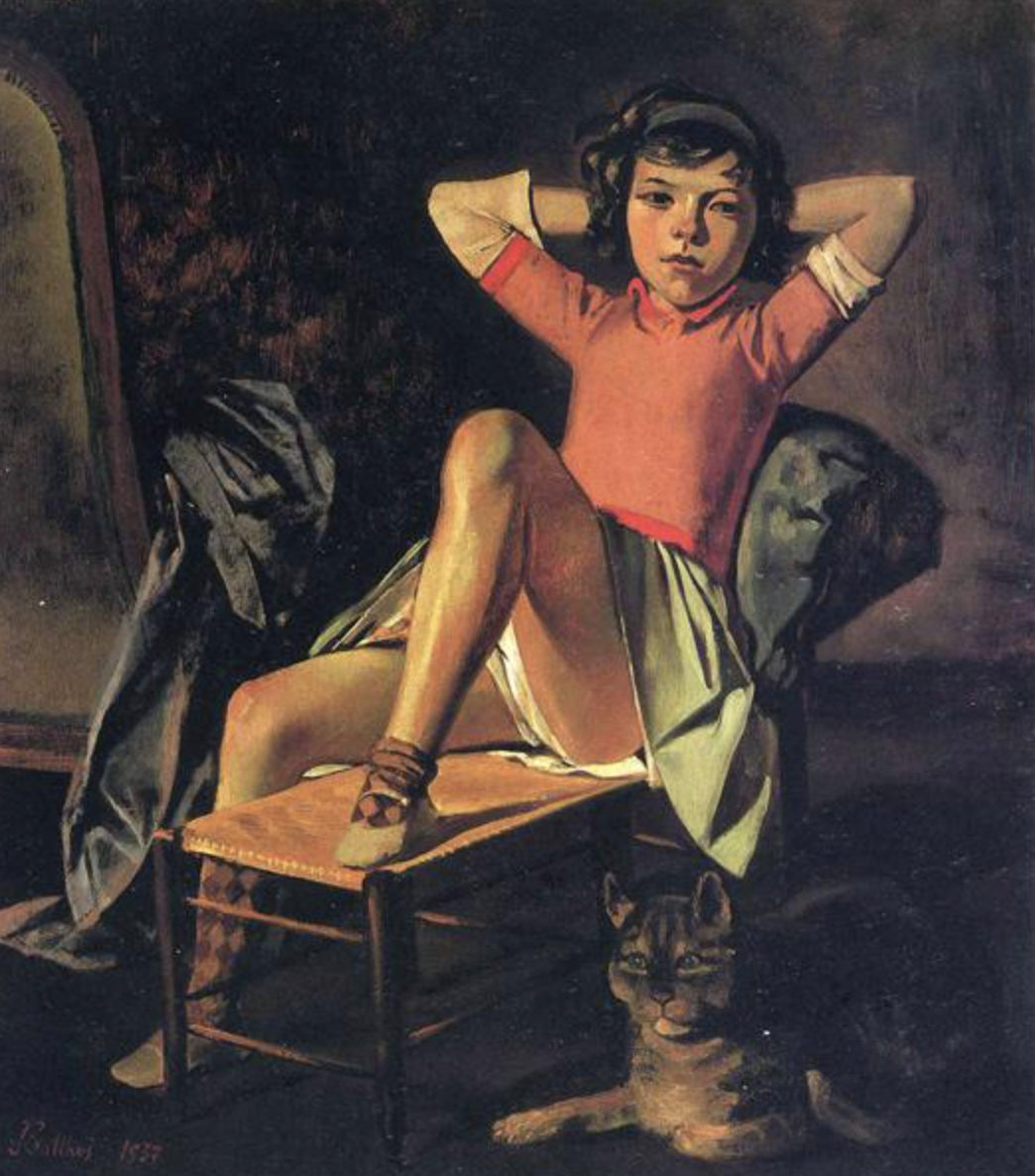
Cats persist at the edges of art, philosophy, and technology not as subjects, but as interruptions that quietly destabilise meaning and remind us of another way of being.
There is something both ridiculous and entirely profound about the fact that, at the cutting edge of technological, philosophical, and artistic development, one will almost always find a cat. Not metaphorically, not symbolically, but quite literally, sitting there. Watching. Interrupting. Existing with a level of indifference that borders on critique. It is tempting to treat this as coincidence, a quirk of human affection, yet the recurrence is too persistent, too structurally embedded within moments of innovation, to be dismissed so easily. From the early photographic experiments of the nineteenth century, where animals and particularly cats became subjects not simply for convenience but for their capacity to hold still just long enough to register on light-sensitive plates, through to the vast, endlessly iterated outputs of contemporary artificial intelligence systems trained on image datasets saturated with feline presence, the cat appears not as an accessory to progress but as an uninvited collaborator.


One might recall the early photographic studies of Hippolyte Bayard and William Henry Fox Talbot, where domestic scenes often included animals as compositional anchors, or later the quietly observant cat in Pierre Bonnard’s interior paintings, where the animal is neither subject nor background but something in between, a kind of sentient punctuation. The cat resists categorisation, and in doing so, destabilises the hierarchy of the image itself. It is neither servant to narrative nor obedient to the frame. It simply is. This refusal aligns curiously with the conditions of modern and contemporary art, where the dissolution of fixed meaning and the embrace of ambiguity have long been understood as sites of criticality.


It is here that Roland Barthes quietly enters the room, cat in tow. While Barthes is more readily cited for his theorisation of the image, authorship, and the punctum, there is a lesser-discussed intimacy in his writing that emerges through fleeting references to the everyday, including the presence of animals. In Camera Lucida (1980), the punctum is described as that which pricks or wounds the viewer, a detail that escapes codified meaning. One might mischievously suggest that the cat, so often appearing at the edges of images, half-withdrawn from compositional intent, operates precisely in this register. It is not the subject we are told to look at, but the one we cannot ignore. Elsewhere, in Barthes’ journals and fragments, the domestic sphere is punctuated by moments of quiet observation, where the presence of the cat becomes less an object of description and more an atmosphere of being. The cat does not illustrate theory; it inhabits it.


If Barthes offers us the cat as punctum, then Louis Wain offers something closer to a full-scale visual philosophy. Wain’s prolific illustrations of anthropomorphised cats, emerging in the late nineteenth and early twentieth centuries, have often been framed through the lens of his mental health, with his increasingly abstracted and kaleidoscopic feline forms cited as evidence of psychological deterioration. Yet to reduce Wain’s work to pathology is to overlook its radical reconfiguration of visual language. His cats do not simply mimic human behaviour; they expand it, fracturing perspective, colour, and pattern into something that feels uncannily aligned with later modernist and even digital aesthetics. There is, in Wain’s later works, a strange anticipation of pixelation, of fractal repetition, of the dissolution of coherent form into pattern. The cat becomes not just subject, but system.


Philosophically, the affinity between cats and thinkers is well rehearsed, though often treated with an air of anecdotal amusement. Arthur Schopenhauer, whose pessimistic worldview might suggest a disdain for worldly attachments, nonetheless recognised in animals a form of being unburdened by the delusions of human striving. Later, Jacques Derrida’s now widely cited meditation on being observed naked by his cat becomes less a whimsical aside and more a profound destabilisation of human exceptionalism. The cat, in this instance, becomes an epistemological rupture, a confrontation with the limits of language and knowledge.

It is perhaps no surprise then that in the contemporary moment, where artificial intelligence promises both unprecedented creative expansion and profound existential unease, cats have once again emerged as central figures. Early experiments in machine vision and image generation frequently relied on large datasets drawn from the internet, a visual culture already saturated with feline imagery. The now infamous tendency of AI systems to generate, misrecognise, or overproduce cats is not incidental; it is infrastructural. The cat has been used, quite literally, to teach machines how to see. In convolutional neural networks, image recognition tasks were often benchmarked against the identification of animals, with cats serving as a recurring test case due to their variability in form, posture, and environment. In more recent generative models, from GANs to diffusion systems, the cat persists as both training data and aesthetic output, appearing in images that oscillate between hyperrealism and surreal distortion. There is something almost too fitting in this: that at the frontier of non-human image production, we find another non-human presence, already embedded, already watching.
As Hito Steyerl suggests, the circulation of images within digital economies cannot be disentangled from their political and material conditions. The cat, endlessly reproduced, becomes both commodity and agent within this system, a figure through which visibility, labour, and value are negotiated. Yet it also resists total assimilation. The slightly off AI-generated cat, with too many limbs or eyes that refuse alignment, reintroduces a kind of productive discomfort, a reminder that representation is never fully mastered.

A man who says he “couldn’t resist” looking up the online listing for his neighbour’s home on sale was left stunned when he found pictures of his cat relaxing on one of the beds. Mirror, UK (2021)
Yet to reduce the presence of animals in art and thought to technological curiosity would be to overlook their more enduring function as a form of emotional and psychological ballast. In the twentieth century, amidst the devastations of war, artists and writers repeatedly turned towards animals and the natural world as sites of solace, continuity, and resistance. Virginia Woolf writes of the necessity of attending to the ordinary, the quietly persistent elements of life that continue despite human catastrophe. T. S. Eliot’s Old Possum’s Book of Practical Cats emerges not merely as whimsical verse but as a strangely necessary articulation of multiplicity and character at the brink of global conflict. The cat becomes a figure through which complexity can be held without collapse, where identity can be fluid, contradictory, and unresolved.
Visual artists have long understood this. Balthus’s recurring inclusion of cats produces a tension that is both domestic and uncanny, while Leonor Fini elevates the cat as a symbol of autonomy and resistance. Even in contemporary practice, Ai Weiwei allows cats to move freely through his studio and public imagery, their presence subtly undermining the rigidity of institutional space.

To speak of cats, then, is not to indulge in sentimentality, though sentiment is certainly present. It is to recognise a persistent, almost mischievous presence that threads itself through the most serious of human endeavours. At a moment in the twenty-first century where the resurgence of authoritarian ideologies and the spectre of neo-fascism cast long shadows across cultural and political landscapes, the role of animals as companions, as grounding forces, becomes newly urgent. They do not offer solutions, nor do they participate in discourse, yet their presence insists upon a different register of being. They remind us, perhaps inconveniently, that life continues beyond the frameworks we construct to contain it.


There is a quiet promise in this. The cat, uninterested in our systems yet inevitably entangled within them, offers a model of resistance that is neither overt nor passive. It occupies space without justification. It appears in images without permission. It becomes, again and again, the cameo we did not plan but cannot exclude. And in this persistence, there is both comfort and critique. The future, it seems, will continue to be built alongside them.

References
Barthes, R. (1980) Camera Lucida. London: Vintage.
Barthes, R. (1977) Image, Music, Text. London: Fontana.
Derrida, J. (2008) The Animal That Therefore I Am. New York: Fordham University Press.
Eliot, T.S. (1939) Old Possum’s Book of Practical Cats. London: Faber and Faber.
Schopenhauer, A. (1851) Parerga and Paralipomena. Oxford: Clarendon Press.
Steyerl, H. (2009) ‘In Defense of the Poor Image’, e-flux journal, 10.
Woolf, V. (1929) A Room of One’s Own. London: Hogarth Press.
Wain, L. (1901–1939) Illustrations of Cats. Various publications.
https://www.mirror.co.uk/news/weird-news/man-looks-up-neighbours-house-23809843


