This meditation explores the limitations and failings of the artist statement.

I don’t know about you, but I agonise every time I update my artist statement. Not because I don’t know what to include in the statement or how to structure it — I’ve been writing artist statements for forty years! I struggle because every time I write a new one, I face the same quandary — how do I compress the experience that underpins my creative practice into two or three paragraphs making it convey my work meaningfully for someone reading it? Which bits should I prioritise? How do I express the ontological and epistemological factors that convey what the work is, what the work does, and where the work comes from, countered by those intimate and barely expressible reasons for why I make the work — details that are really only meaningful for me and are things that I can hardly articulate because they are more sensory than they are formulated thoughts.
In many ways, I empathise with artists who say, ‘the work speaks for itself,’ but I know the work does not speak for itself. No art can ever fully speak for itself, because every viewer brings a different world of experience to the moment of viewing and the work will communicate something different to everyone who sees it. Any intention I have in making the work and any hope I have of communicating through the work really stays with me. I dread the question which invariably comes, ‘so what is going on in your work?’ It is the equivalent of asking for my artist statement. How can I possibly answer this in less time than it has taken me to live my life and to sift through the accumulation of knowledge that life represents?
Creative practice is an engagement with differentials; elusive ideas, changing interests, variable motivations, expanding or contracting theories, material explorations, mutable experience, faulty memory, the march of time, the fluctuation of light, a need for clean water…
I much prefer to hear what people see in the work because it tells me when I’ve struck a chord, which I believe is the most I can achieve through the work in terms of it speaking for itself. But even that is constrained by cultural and social sameness of experience. Individuals from other social and cultural experiences may find the work is mute. Can an artist statement bridge that gap? I don’t think so. The artist statement is at most a document of culturalization and socialisation. It is a shorthand of materiality, knowledge, motivation, and artistic achievement that makes it easier for a visually and culturally educated person to find an entry point into the work. It strives to communicate to similar experience, to find commonalities and points of reference, thereby smoothing out difficulties of viewing. Can an artist statement actually achieve this though?

Creative practice is an engagement with differentials; elusive ideas, changing interests, variable motivations, expanding or contracting theories, material explorations, mutable experience, faulty memory, the march of time, the fluctuation of light, a need for clean water, and so many other vital essentials and insignificant minutiae. Surely these entangled relations of reality make the notion of an artist statement seem absurd. Karen Barad would call this array of changeability ‘material-discursive intra-actions,’ where objects are not merely lumps of materiality, but are also activated concepts refracting with other objects — including the intangible kind of objects that have found their way into philosophical discourse and critical theory.
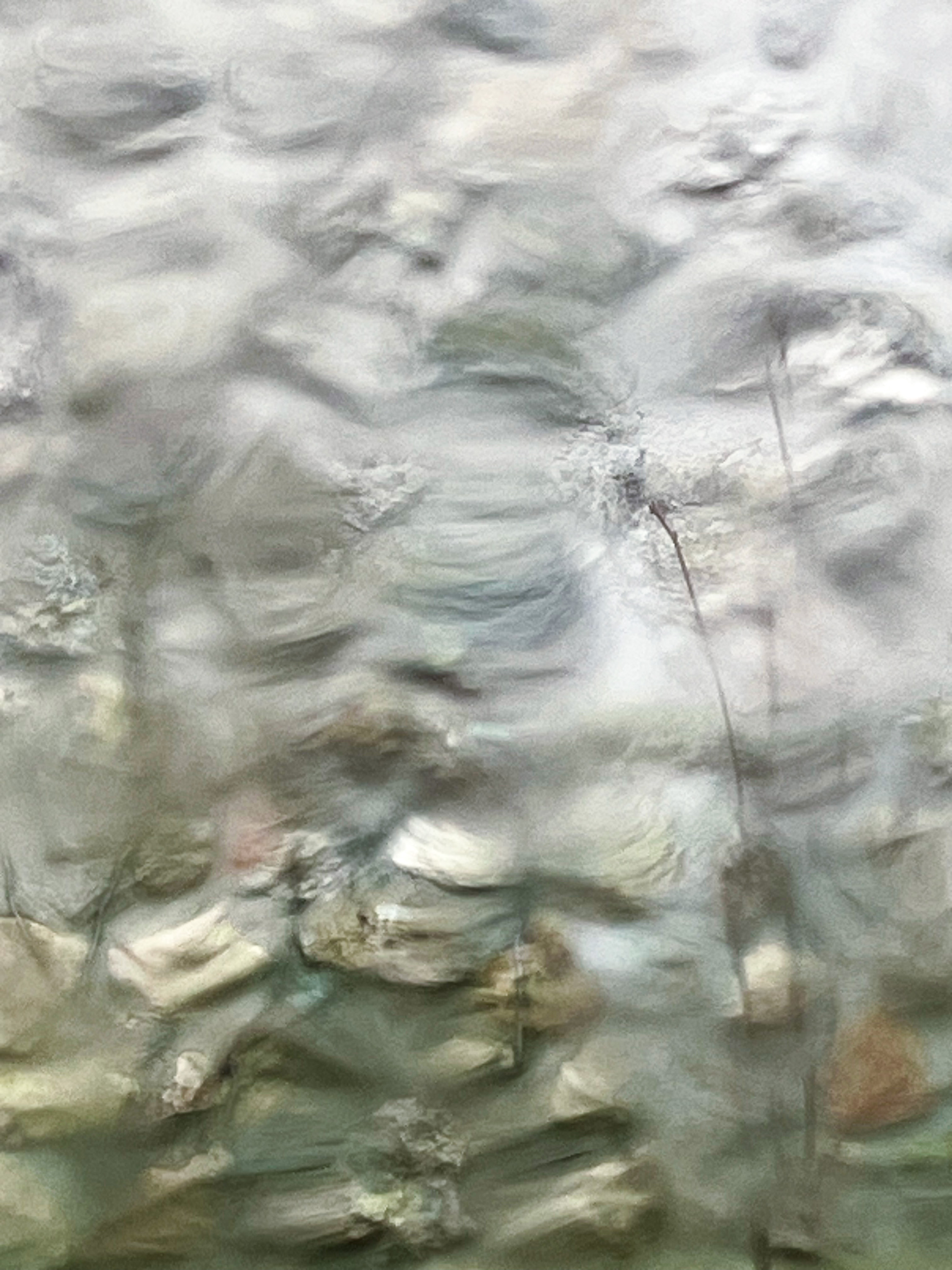
In her philosophical treatise on the nature of reality, Meeting the Universe Halfway, Barad has based her views on the physics/philosophy of Niels Bohr, a giant in the field of quantum physics. She says, “Reality is composed not of things-in-themselves, or of things-behind-phenomena, but of things-in-phenomena,” (Barad, 2007:205). However, what Barad means by ‘phenomena’ here is not sensory phenomenology, but rather, material entanglements; things causing ripples that merge and diffract other ripples like throwing stones in water — things-in-phenomena. This is the very nature of the artist at work in creative practice. No artist statement can ever encapsulate this multiplicity to satisfaction, because no statement of media, themes, and motivations can convey what has been learned and observed in the in-between space represented in the material-discursive intra-actions of these entangled elements of our practice — not to mention the sudden shift in direction these entanglements might take.

So, because it is required, I resolve to state what media I work in, describe what the main themes in the work are, what my motivations are, and who inspires me. I might start with a punchy first sentence or give a meaningful quote to illustrate a point. I might mention important achievements or relate a significant turning point where my artwork or the conditions of its making changed…and I leave the rest uncommunicated, not because it is private, but because it is incommunicable. Really, all I want to say is ‘I hate artist statements. If you want to know what my work is about, tell me what you see.’ In fact, the best artist statement I have ever read was, “I just paint.”
I can only hope for that chord to strike and that it will breech a barrier that cannot be penetrated any other way, no matter what I write in my artist statement.
P.S. Thank you to Linda Alterwitz for letting me use her beautiful photograph in this post to illustrate Barad’s notion of material entanglements.


